Stop Guessing: How to Pick the Right Mic for Vocals, Dialogue and Streaming
- Justin Robinette
- Oct 20, 2025
- 3 min read
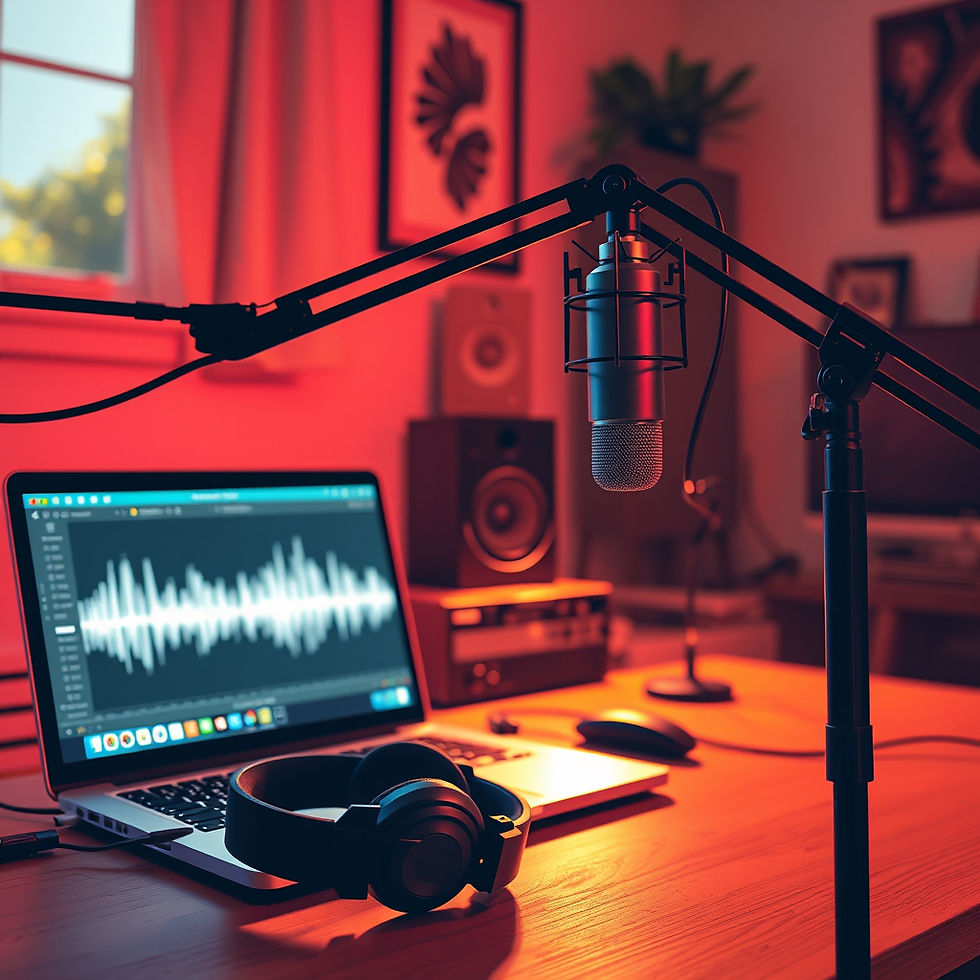
Buying a microphone should not feel like guesswork. With so many types, prices and opinions online, it is easy to get overwhelmed. This guide breaks it down in simple terms. By the end, you will know which microphone fits your voice, your recording space and what you want to create. Whether you make music, podcasts, dialogue or live streams, this post gives you a clear starting point.
1. The Three Main Types of Microphones
Dynamic microphones
Durable and reliable
Handle loud sounds well
Reject background noise better than other types
Do not require phantom power
Example: Shure SM57. Price around 100 dollars. Used on vocals, guitar amps and even snare drums.
Condenser microphones
More sensitive
Capture clarity and fine detail in vocals and instruments
Need phantom power from an audio interface or mixer
Best in quiet or treated rooms
Example: Rode NT1. Extremely low self-noise and very clear vocal recordings.
USB microphones
Plug directly into your computer with no interface needed
Good for streaming, gaming, quick voiceovers or beginners
Example: Blue Yeti. Popular because it is simple, affordable and works with almost any setup.
2. How to Choose Based on What You Are Recording
What You Are Recording | Best Type of Mic | Why |
Singing and vocals | Condenser | Clear and detailed vocal sound |
Dialogue and podcasts | Dynamic if room is noisy, Condenser if room is quiet | Dynamic blocks room noise. Condenser sounds more natural in a treated room |
Streaming and gaming | USB | Fast setup and no extra gear needed |
Foley and sound effects | Depends on sound | Loud effects work better with dynamic. Subtle textures work better with condenser |
3. Room Matters More Than You Think
You can buy an expensive microphone and still get a bad recording if your room is not treated. Hard walls, echo and background noise will be captured, especially by condenser microphones.
If your room is noisy or reflective:
A dynamic mic like the Shure SM57 or SM58 will pick up less of the room.
Use blankets, pillows, carpet or record in a closet to control reflections.
Always record a few seconds of room tone. This helps blend audio later when editing.
A cheap mic in a quiet room often sounds better than a high-end mic in a noisy one.
4. Do You Need an Audio Interface?
You need an interface if:
You use XLR microphones like the Shure SM57 or Rode NT1.
You want phantom power for condenser microphones.
You want cleaner sound and volume control (gain).
You do not need an interface if:
You use a USB microphone. It already has a built-in preamp and converter.
Popular beginner audio interfaces include:
Focusrite Scarlett Solo or 2i2
PreSonus AudioBox USB
M-Audio AIR series
5. Budget Guide
Budget | Microphones to Consider | Notes |
0 to 100 dollars | USB mics like Blue Yeti, FIFINE K690 | Easy and affordable |
100 to 200 dollars | Shure SM57, SM58, Audio-Technica AT2020 (XLR) | First step into studio-style gear |
200 to 400 dollars | Rode NT1, Shure MV7, AKG P420 | Higher clarity and lower noise |
Remember: improving your room, mic placement and technique makes a bigger difference than buying a more expensive microphone.
6. Common Mistakes to Avoid
Buying a condenser mic when your room is untreated or loud.
Buying a USB mic if you know you want to upgrade to full studio gear soon.
Speaking too far or too close to the mic.
Ignoring gain settings. If your input clips or is too quiet, no microphone can fix that.
7. Quick Cheat Sheet
Recording vocals in a quiet room → Condenser mic
Recording podcasts or dialogue in a noisy room → Dynamic mic
Streaming or gaming and want something simple → USB mic
Planning to upgrade your setup over time → Start with XLR dynamic mic and audio interface
Wrap-Up
Choosing a microphone does not have to be confusing. Match the mic to your space, your voice and your workflow. A five hundred dollar mic in a bad room will never beat a one hundred dollar mic used well in a quiet space.
If you found this helpful, subscribe to This Just In for weekly audio production tips, presets and realistic advice you can actually use.



Comments